
What Are the 5 Elements of Feng Shui? How to Use Them to Attract Abundance


Have you ever felt like you’re doing everything right…working hard, saving, planning — yet abundance still feels just out of reach?
The answer may not be in your effort.
It may be in your environment.
In Feng Shui, your surroundings are not just physical — they are energetic. And when this energy (Chi) is blocked, stagnant, or unbalanced, it can quietly affect your ability to attract wealth, success, and opportunities.
The good news?
You can change this — by understanding and applying the Five Elements of Feng Shui.
Why Environment Matters More Than You Think
Most people focus on:
Skills
Strategy
Hard work
But overlook one powerful factor:
The energy of the space they live and work in.
A cluttered, dull, or poorly arranged environment can:
Reduce motivation
Block creativity
Create mental fatigue
Slow down opportunities
On the other hand, a balanced space:
Improves focus
Enhances clarity
Attracts better decisions
Supports abundance
This is where the Five Elements come in.
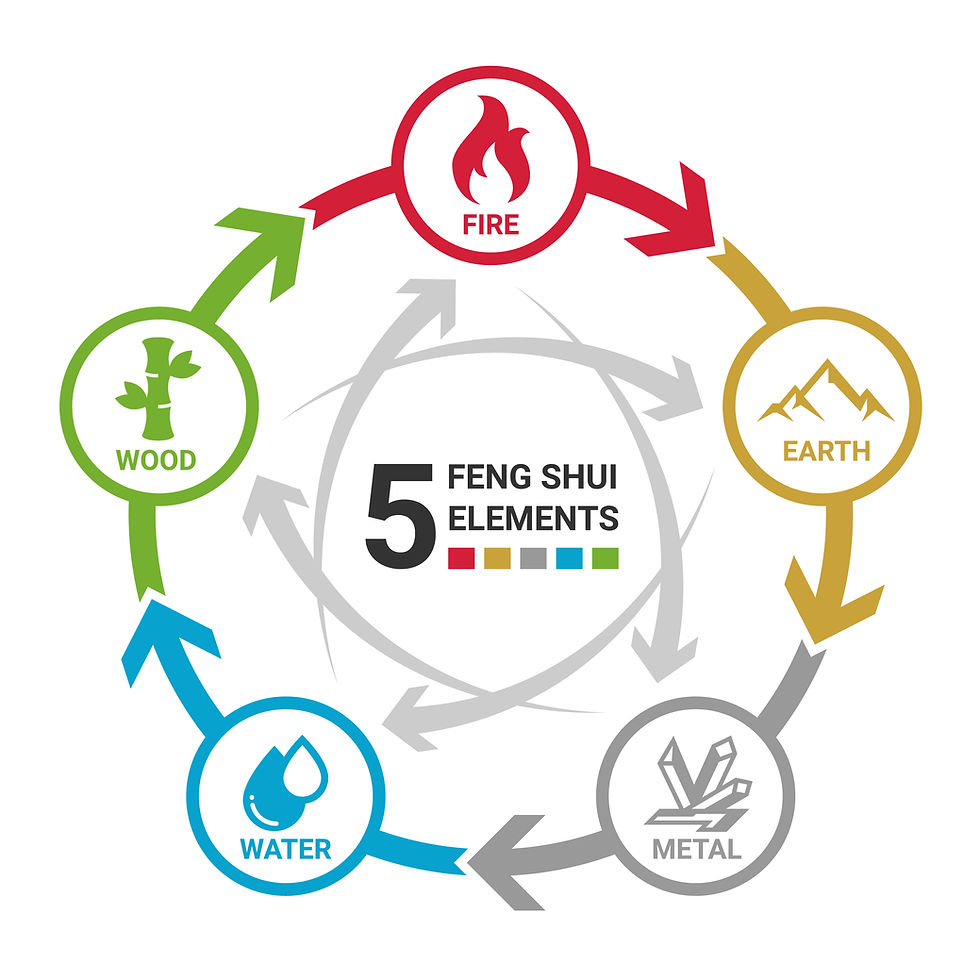
The 5 Elements of Feng Shui (And What They Mean)
Feng Shui is built on five core elements:
🌳 Wood – Growth & Expansion
🔥 Fire – Energy & Passion
🌍 Earth – Stability & Balance
⚙️ Metal – Clarity & Precision
🌊 Water – Flow & Abundance
Each element represents a different type of energy.
And when these are balanced in your space, life begins to feel smoother, lighter, and more aligned.
How to Use Each Element in Your Space
Let’s break this down into simple, practical steps.
🌳 1. Wood Element – For Growth & New Opportunities
Wood represents expansion, creativity, and new beginnings.
If you feel stuck or stagnant, this is the element to activate.
How to add it:
Indoor plants
Wooden furniture
Green colors
Even a small plant on your desk can shift your energy toward growth.
🔥 2. Fire Element – For Motivation & Visibility
Fire brings passion, confidence, and action.
It helps you:
Take initiative
Stand out
Move forward
How to add it:
Candles
Warm lighting
Red or vibrant accents
This is especially useful if you feel low on energy or drive.
🌍 3. Earth Element – For Stability & Support
Earth creates grounding and emotional balance.
If life feels chaotic or uncertain, you need more Earth energy.
How to add it:
Stones or crystals
Ceramic décor
Beige, yellow, or earthy tones
It helps you feel secure and supported.
⚙️ 4. Metal Element – For Focus & Clarity
Metal sharpens thinking and improves decision-making.
Perfect for:
Workspaces
Study areas
Planning zones
How to add it:
Metallic objects
White or grey tones
Organised, minimal setups
It removes mental clutter and increases precision.
🌊 5. Water Element – For Wealth & Flow
This is the most powerful element for abundance.
Water represents:
Flow of money
Opportunities
Life movement
When water energy is strong, things start flowing more easily.
How to add it:
Small indoor fountain
Blue or black accents
Mirrors (used correctly)
Even a symbolic representation can activate this energy.
Why the Water Element Stands Out
Among all five, the Water element plays a key role in attracting wealth.
Why?
Because abundance is not about force — it’s about flow.
When energy flows:
Opportunities come naturally
Money circulates better
Life feels less forced
A small water feature or even intentional use of water colors can make a noticeable difference.
The Real Secret: Balance, Not Overuse
Feng Shui is not about adding everything.
It’s about balance.
Too much of one element can create an imbalance:
Too much Fire → stress and conflict
Too much Water → emotional overwhelm
Too much Earth → stagnation
The goal is harmony.
Final Thought
Feng Shui is not superstition.
It is awareness.
Your space is constantly influencing:
How you think
How you feel
How you act
And ultimately — what you attract.
When your environment supports you, life begins to respond differently.
Watch the Full Video
🎥 What Are the 5 Elements of Feng Shui? How to Use Them to Attract Abundance👉 https://youtu.be/8czl4I6aUDE
✨ Start small. Add one element today. And observe what begins to shift.
💬 Tell me in the comments: Which element is missing in your space right now?
Comments